It is that time of the year, Bracket Busters, Cinderellas, Upsets, Buzzer Beaters and so much more become a part of our everyday world. March Madness is upon us.
This is my FAVORITE time of the year and to celebrate(sleep and sanity can wait) this site will have wall-to-wall coverage of the tournament.
Starting on March 14, I will be doing a post breaking down two regions (so two on the 14 and two on the 15) in these posts I will break down each region, upsets, and other interesting tidbits I may have. Then on the 16th, I will break down my Final Four predictions and championship pick.
Once the madness starts (on the 17), I will be live-tweeting (click here to follow me) as best as I can throughout the day. Then each Monday, I will break down the action from the previous four days and write the obituary of my certainly busted bracket.
On March 18, I will be reviewing one of the most heralded documentaries of all time, Hoop Dreams for Matt Connarton Unleashed on WMNH Radio. This film follows two men for their four-year high school career as they try to overcome poverty and tragedy to achieve their dream of making it to the NBA. Also, Friday will be a blog post looking at those that tried to achieve the same dream and it turned into a nightmare.
I hope you join me. Please read, comment and let us discuss this most maddening and joyful time of the year!
MARCH MADNESS COVERAGE SCHEDULE:
Monday March 14, 2022 East and West Bracket Breakdown and Predictions Tuesday March 15, 2022 South and Midwest Bracket Breakdown and Predictions Wednsday March 16, 2022 Final Four and Championship Game Breakdown and Predictions Thursday March 17, 2022 The Tournament Begins with live tweeting. Follow me here ERPilcher319 Friday March 18, 2022 Hoop Dreams Film Review for Matt Connarton Unleahed on WMNH Radio. Friday March 18, 2022 New Blog Post tying into th Classic Film Review, When a Dream Becomes a Nightmare Monday March 21, 2022 Blog Post breaking down all the action of the first two rounds and Sweet Sixteen and Elite Eight analysis.
For those of you that are uninitiated, I’m a film fan or cinephile, as we are known. Movies have always offered a form of escapism for me, as it does for the majority of those that view them. As I have aged, my film tastes evolved (mainly through viewing The Godfather in 1998 and college film courses), I became entrenched in classic Hollywood style and genre evaluation.
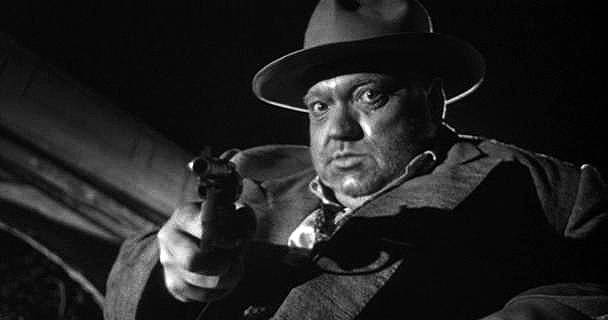
Orson Welles in a blockbuster performance as corrupt Police Captain Hank Quinlan in the seminal Film Noir, Touch of Evil. Welles also directed the film and it was his final film directed in America Photo Courtesy: IMDB
I enjoy many different genres of film, but one has always stuck with me and that is Film Noir. The genre evolved from the pulp detective stories that came about during the Great Depression. These films are films that embrace the dark side of the world, the urban, crime-ridden areas. They are approached with a cynical view of the world. We have no heroes, everyone has an ulterior motive and their actions only serve themselves. Filmed with a dark, deep filming style and biting, bitter venom laced dialogue these films bring you into these world. The central character is often down on their luck in life and could be a law-abiding citizen or a criminal. It does not matter, that is how much this genre blurs the lines between right and wrong.
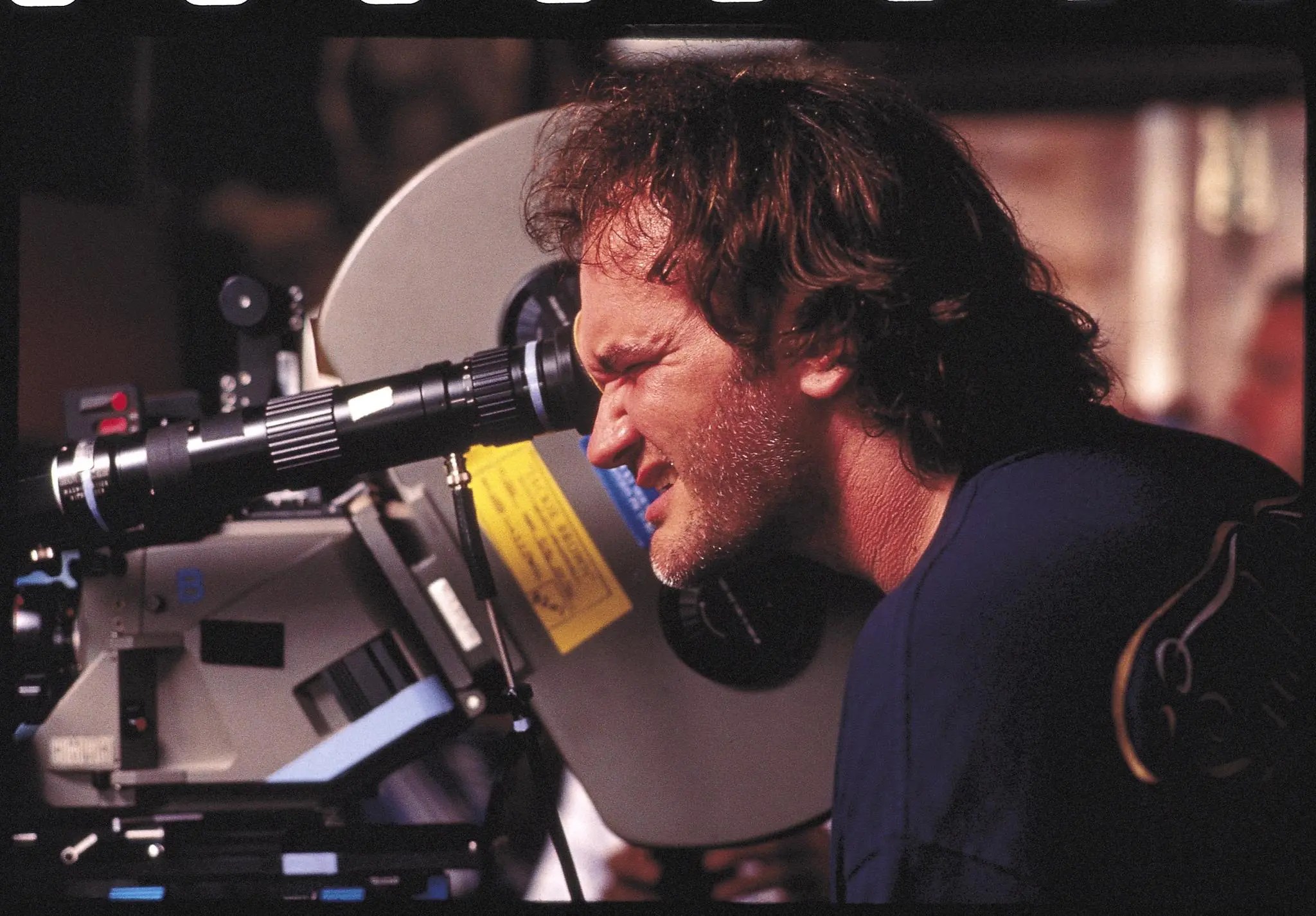
Director Quentin Tarantino best uses elements of noir in modern cinema Photo Courtesy: Den of Geek
More than likely, you have viewed a noir film and not even known it. Early gangster films (another favorite genre of mine) such as Public Enemy, Little Ceaser, and Scarface exude many elements of noir. Other famous noirs are Key Largo, The Postman Always Rings Twice, Pickup on South Street, Asphalt Jungle, Chinatown, and Touch of Evil. In the modern era, director Quentin Tarantino has used noir elements in many of his films. Most notably, Pulp Fiction, Reservoir Dogs, and Jackie Brown.
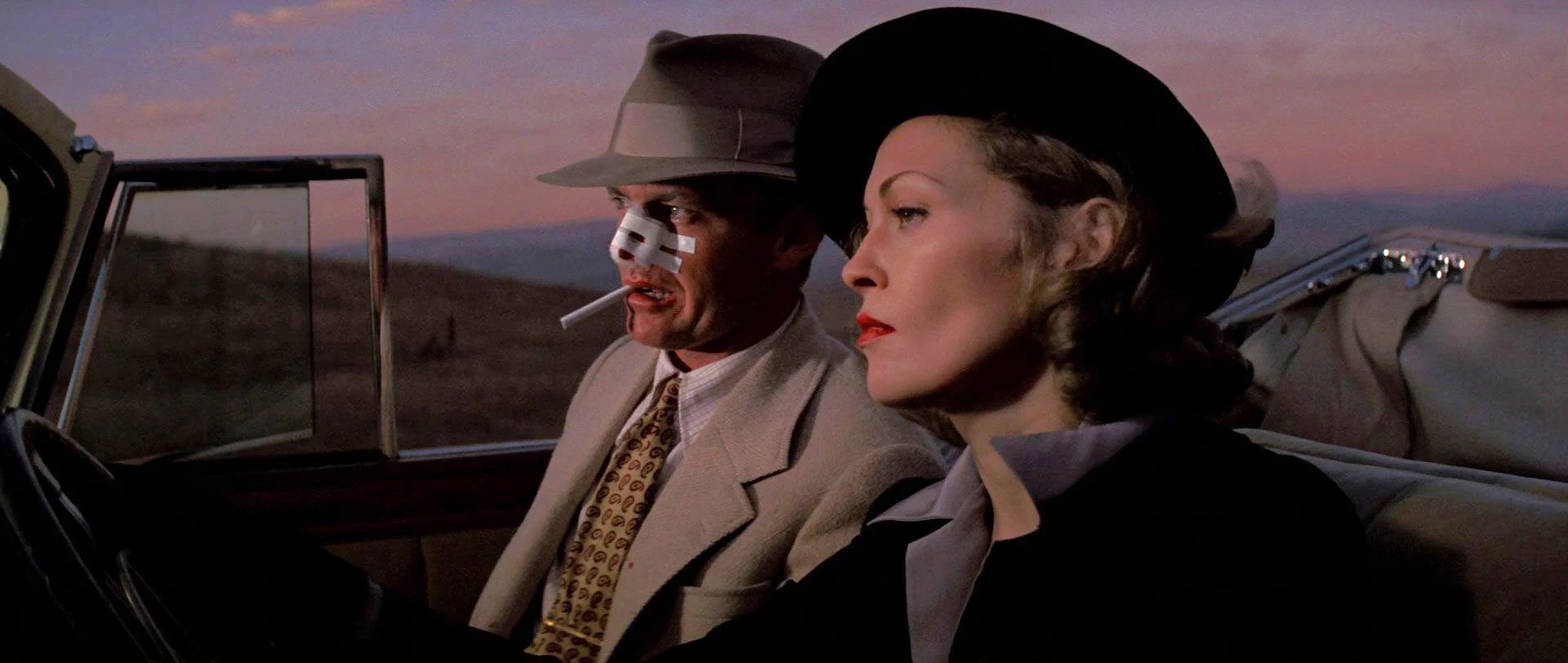
The Roman Polanski film Chinatown is one of the most well known Film Noirs. The film stars Jack Nicholson and Faye Dunaway. Photo Courtesy: American Cinematographer
The difficult aspect of noir films is how does one of these films become successful? Many times while reading about one of the films, you realize they were not successful in the theaters. Their success was found in art houses and by critical film analysts. This resurgence leads to their appreciation and affirmation as great cinema. But upon further review, one can see there is a tie to the success of these films.
The world has to be as dark, cynical, and as down and out as the subjects and areas are.
I’m a firm believer that for a film to have success, there has to be a degree of relatability. If that is not there then the film needs to be so separated from reality that a viewer can escape into the film. When the nation is in financial peril, at war, crime rates are high, there are vast divisions and differences between people, and so forth. This causes people to flock to these films. That is because they mirror our world and we can see ourselves in it
That is because all those circumstances are circumstances we are facing right now.
That we can look at a theater screen and say “I’m feeling exactly what this lead character is” or “This is how I see the world” is such a powerful aspect to viewing film. And, because of these feelings we can escape into that world and feel that it is offering us a vision of promise. That the world might be bad now, but there can always be a silver lining. That is what noir offers, a dark world that through these real individuals we see how we can endure the situation.
I feel noir is looked at as a forgotten genre and that is a great shame. In this current cynical world, we need noir films. The characters can be our new heroes, our beacons of light in a dark, hero-less world. We need to be released into worlds that are darker and as hopeless as we may feel our current world is. As depressing as this may seem, the end credits provide a light. That is a light of hope, that tomorrow will be a better day.


 Pilcher's Point